Terada con Shinkiro:

Y una espectacular galería dedicada al 2º (¡con entrevista!):

http://urban-muse.com/blog/Urban-Muse-S … ospective/
Las gracias a Chaz: http://www.advantaged.net/boulette/view … 20#p189620
No has iniciado sesión. Por favor, inicia sesión o regístrate.
Postback » Mensajes hechos por Recap
Terada con Shinkiro:
Y una espectacular galería dedicada al 2º (¡con entrevista!):
http://urban-muse.com/blog/Urban-Muse-S … ospective/
Las gracias a Chaz: http://www.advantaged.net/boulette/view … 20#p189620

'El Dios Bélico de la Lanza Maligna y la Guerra de los Héroes'. Parece que estamos ante un nuevo episodio de la Dept. Heaven, si nos atenemos a los nombres que Famitsu Dot Com vincula al desarrollo. Nuevo S-RPG de Sting para Mayo, en cualquier caso:
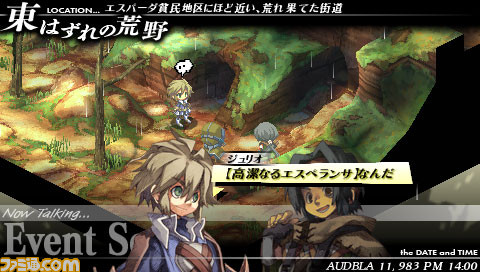
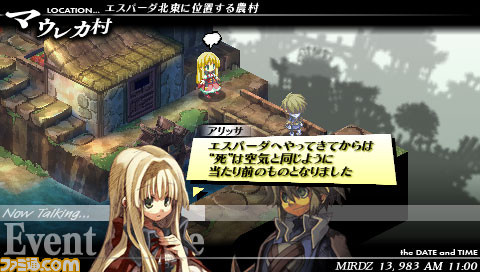
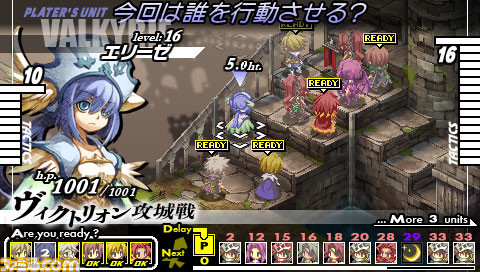


http://www.famitsu.com/news/201102/24040660.html
Y por-tá-til, cómo no. ¿He dicho alguna vez lo MAL que va el mundo?
Nuevo vídeo: http://www.famitsu.com/news/201102/24040724.html
El reportaje de G-Para menciona una única fase extra en la versión 3-60 para un total de 7:
30 de Marzo sería la fecha para la versión en 3-60, según GN 1.0:
Confirmado: http://www.grev.co.jp/blog/archives/94
25 y 26 de Febrero: festival 'on-line' de Cave.
Yo no, pero igual.
30 de Marzo sería la fecha para la versión en 3-60, según GN 1.0:
25 y 26 de Febrero: festival 'on-line' de Cave. Más datos, la próxima semana.
Yeah. "Roberto Ferrari", according to the official site. Should've checked it. Thanks.
La principal novedad es que todos sus gráficos se han reconstruido en alta resolución (que no en 'HD', como los habituales iletrados ya están propagando)
Capturas en 'HD' para los que duden aún:
http://www.4gamer.net/games/129/G012901/20110219004/
Vídeo de Death Smiles para I-Phone acompañado de un nuevo 'adventure game' para I-Phone y Android en el mismo enlace.
La mejor noticia de la conferencia de Cave [ > ]: la prometida traslación ARC - X360 no es Feveron sino Akai Katana, que llevará el apellido 'Shin' ('auténtico') y saldrá en DVD-ROM en Mayo:
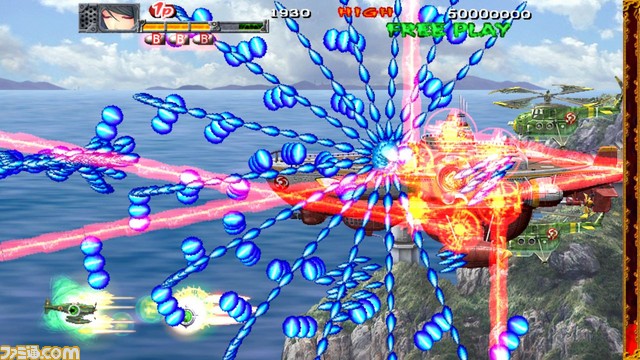
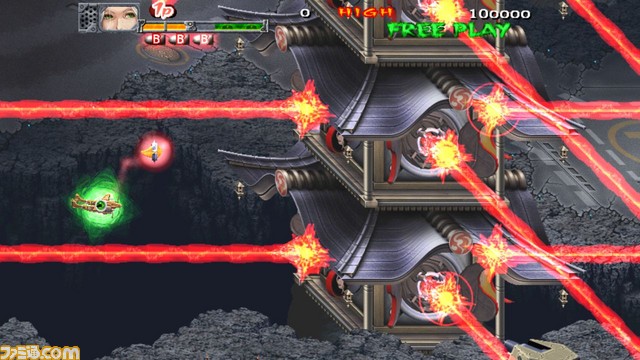
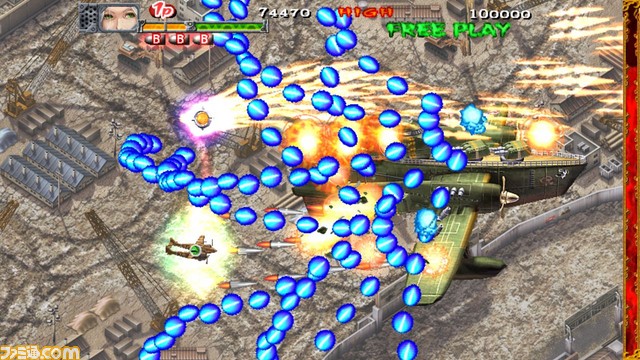
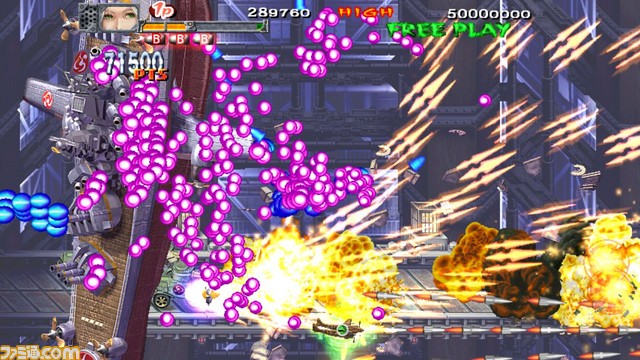

http://www.famitsu.com/news/201102/imag … uI5Wo.html
http://www.cave.co.jp/gameonline/Xbox360/akaikatana/
La principal novedad es que todos sus gráficos se han reconstruido en alta resolución (que no en 'HD', como los habituales iletrados ya están propagando), escenarios incluidos, por primera vez. El modo Shin usará formato panorámico y fases extra, pero se ha incluido un modo en 4 : 3, respetando el del 'arcade' pero con los mismos gráficos reconstruidos. Es una pena, como ya dije en el hilo de Daifukkatsu, que hayan abandonado la opción para gráficos diseñados en baja, aunque aquí es incluso más comprensible. A ver si al menos podemos tener un modo sin el grotesco 'hitbox' visible.
Decepcionante, el aspecto que ha tomado el prometido "juego de acción 2-D" de Cave para XBLA [ > ]:
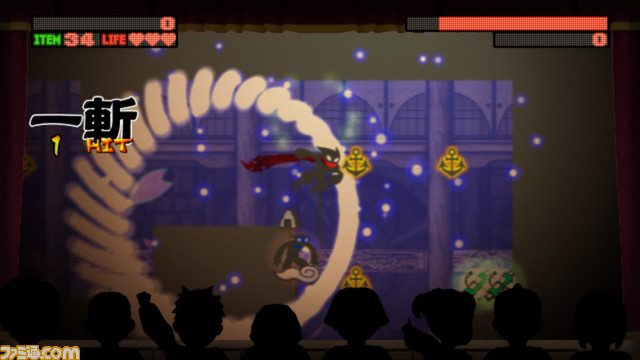
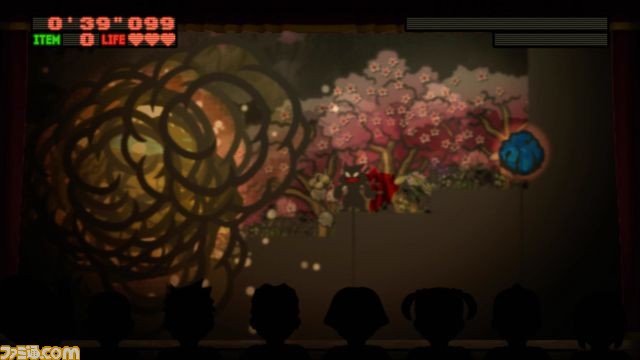
http://www.famitsu.com/news/201102/imag … mb9E8.html
http://www.cave.co.jp/gameonline/Xbox360/nin2-jump/
Al menos, prometen un modo de acción directa y contenido condensado.
Aún sin fecha.
'Instant Brain', nombre del 'adventure game' por fin presentado, aunque sin sistema de destino revelado:
http://www.famitsu.com/news/201102/19040525.html
Gracias por poner más cuidado con la ortografía y demás, Kai. Para la próxima repásate el uso de tildes y del punto y aparte y separación de párrafos.
Tus opiniones siguen siendo de todo a cien, me temo. Una de dos, o pones enlaces o documentación que soporte tus pesquisas, o explicas cómo estás jugando Progear (placa o emulador) y bajo qué condiciones exactamente. De otro modo, tiene valor cero. Si como sospecho, es mediante emulación, tus 'settings' y 'hardware' pueden ser la causa de los problemas sonoros (gran parte de ellos; los pequeños desajustes eventuales son normales en realidad). Y no; Progear NUNCA se concibió para otro sistema, tal como refleja más de una entrevista a sus autores. Cave ha usado música "pregrabada" desde Donpachi.
Y usa otro hilo, por el amor de Dios.
La conferencia para presentar los nuevos títulos de Cave para 2011 ya tiene fecha y lugar: 19 de Febrero en el Belle Salle de Akihabara:
Se retransmitirá en directo desde este canal:
http://www.ustream.tv/channel/cave2011
2:00 AM, hora peninsular española.
No parece que muchos se hayan dado cuenta, pero el Neo-Geo Station ha traído consigo un interesante extra por medio de su espacio 'web' -- algunos de los 'dossiers' originales de Gamest sobre cada juego en formato digital a gran resolución:
http://game.snkplaymore.co.jp/game/neog … eview.html
http://game.snkplaymore.co.jp/game/neog … eview.html
http://game.snkplaymore.co.jp/game/neog … eview.html
http://game.snkplaymore.co.jp/game/neog … eview.html
http://game.snkplaymore.co.jp/game/neog … eview.html
http://game.snkplaymore.co.jp/game/neog … eview.html
http://game.snkplaymore.co.jp/game/neog … eview.html
http://game.snkplaymore.co.jp/game/neog … eview.html
http://game.snkplaymore.co.jp/game/neog … eview.html
http://game.snkplaymore.co.jp/game/neog … eview.html
Si alguien sabe cómo almacenarlos desde Flash en otro formato, que lo cuente...
VP en Famitsu Dot Com:
Con tanto aluvión de juegos de lucha profesionales de dudoso carisma, hay que mencionar que Vanguard Princess no ha dejado de recibir actualizaciones desde su salida. Un prolongado vídeo de la última de ellas, 1.08:
En teoría, 5PB acaba de subir el primer vídeo oficial aquí, aprovechando la actualización del sitio:
http://5pb.jp/games/phantombreaker/movie/index.html
Enlace: Game Nyarth 1.0.
4 Gamer ha entrevistado a parte del 'staff' de desarrollo en AOU (Takashi Yamakawa (¿o 'Yasukawa'?) y Kouhei Nakamura, si alguien quiere investigar):
http://www.4gamer.net/games/128/G012870/20110218022/
Al 60% - previsto para la primavera, pero con el primer 'test' público en Mayo - se han usado elaborados modelos poligonales [en diseño] para poner especial cuidado en la animación - 4 botones, uno de ellos para el asistente - en efecto, el dinamismo y los combates 'tensos' a lo Samu-Supi [con 'contras'] son la clave.
Postback » Mensajes hechos por Recap
Postback, 2005—2026