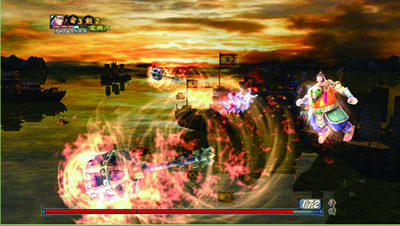
Vídeo:
http://game.watch.impress.co.jp/video/g … p.flv.html
Como era más o menos de esperar de unos "sprites" tan... toscos, están muy bien animados. Pero la acción parece demasiado lenta.
No has iniciado sesión. Por favor, inicia sesión o regístrate.
Postback » Mensajes hechos por Recap
Vídeo:
http://game.watch.impress.co.jp/video/g … p.flv.html
Como era más o menos de esperar de unos "sprites" tan... toscos, están muy bien animados. Pero la acción parece demasiado lenta.
I don't find any of this a problem at all, unless you find the extreme examples making the games simply less fun to play (garrega for instance)
But you indeed watch superplays and credit-feed to learn the games, don't you? I'm sure the perspective is quite different, in that case.
I just leave everything on the default settings.
Vs fighters I have absolutely no interest whatsoever in playing single player (and most arcade fans would feel the same)
That's something, coming from you, I just cannot believe. 'Cause I can't believe you have no interest at all in meeting, fighting and beating, say, the boss in Shin Samu-Supi. Playing against humans on versus games is another dimension altogether, but it doesn't mean playing against the CPU on a game like that isn't utterly fun. Again, not continuing ever does help, though.
From the staff subforum:
Did any of Capcom's rank systems (or that of any company, for that matter) ever work for you? I'm still not sure what I think about rank myself.
The reason I despise all self-adjusting difficulty systems is quite obvious in my eyes, but maybe it's convenient to explain it all -- they overcomplicate the mechanics in already difficult-enough games. They force you to play unnaturally so you can control the rank, and make you find out and learn the triggers for ranking-up. For non superplay fans who only play under the 1 credit rule, this is not only unnecessary, it's too demanding and therefore annoying. And we just don't need different patterns and layouts depending on our performance -- learning one of them is already a hard task enough.
Konami was especially arrogant with this feature and most likely the model for the rest, which just couldn't tolerate their arcade games becoming "too easy" either.
At least we had Treasure.
Son dos, los cartuchos de RAM, y ambos amplían la RAM principal.
No tengo problema con ninguna pregunta por ser más o menos básica --siempre y cuando no haya sido ya contestada aquí o se conteste con un mínimo esfuerzo a través de Google--, pero al menos han de tener cierto sentido.
Voy a intentar hacer como que no he leído la última línea. Shadow over Mystara tenía una deficiencia bastante menor con versiones de MAME relativamente antiguas que hacía que el desvanecimiento de ciertos escenarios al pasar por una puerta no fuese exactamente como tiene que ser, como si el ciclo de la paleta no fuese correcto. No sé si se habrá corregido, pero sospecho que no.
"Snops Attack ~Zombie Defense Squadron~", desde Florida y previsto para Febrero en 3-60:
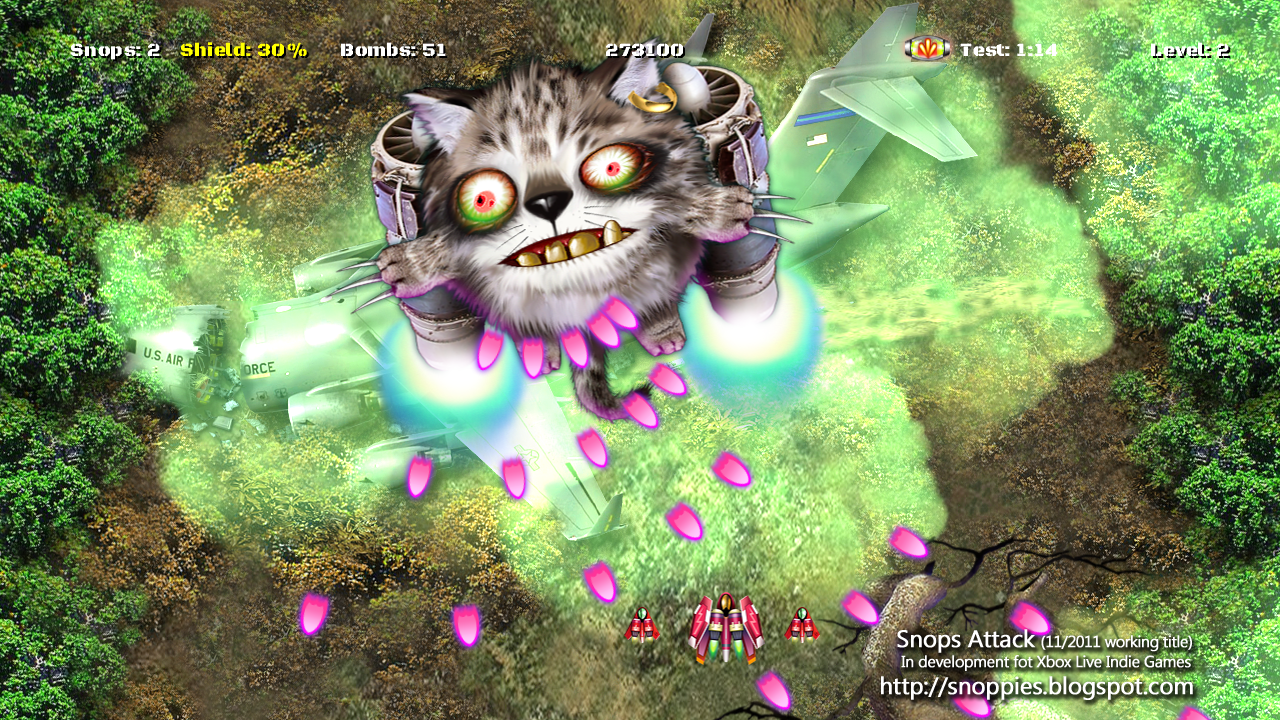

http://blog.danawa.com/prod/?prod_c=235 … gSection=5
Con las ROM de MAME pero bajo licencia y todo, eh.
Es así. Tu solución requiere de un amplificador de voltaje, porque es la entrada preparada para JAMMA. Lo que he encontrado ya fabricado pasaba de los 100 €...
Exagerando, se parecería al efecto del logo de Postback, solo que la proyección, en vez de negra, es más clara que el fondo [blanco]. Pero no hemos tenido tiempo de "tests" aún, no. Nos pasamos el rato intentando averiguar dónde estaba la causa de que ninguna consola entrara por RGB.
Entiendo que te refieres a la calidad de imagen utilizando el PC como fuente (MAME, emuladores, etc.), ¿verdad? El caso es que hay aspectos que yo también considero mejorables, pero no había reparado en esto que comentas. ¿Recuerdas alguna imagen en concreto donde se pueda apreciar esto?
Me refiero a cualquier fuente -- estaba ahí con una DC por "VGA box", con una 3-60 con su cable VGA y con el PC, creo recordar que a través de conmutador de SCART. Se nota sobre todo a alta resolución con algún elemento sobre un fondo blanco o claro, de forma estática, pero también lo encontramos al ejecutar un juego en 15 kHz, con las letras de los marcadores, si no recuerdo mal.
Calamity, gracias. Ya le he preparado un VMMaker.ini para el monitor. Quería hacerle también unos nuevos MameMain.txt y ReslList.txt, pero he pensado que mejor me espero a que podamos hacerlo por nombre de "romset".
Estuve viendo ayer el aparato, por cierto, y no me acabó de gustar la calidad de la imagen. Especialmente por las "sombras" (o dobleces) que crea. Sí que quiero avisar de una cosa:
La conexión de las consolas de 15 kHz tiene una solución bastante inmediata, por cierto, en la que reparé el otro día -- conmutador de SCART electrónico. Existe incluso algún modelo con salida D-sub, por lo que ni siquiera hace falta un cable RGB SCART - D-sub:
Esta solución solo es viable con un separador de sincronismos vertical y horizontal, puesto que el monitor no acepta "RGBs". La misma tienda vende este cable que hace la labor:
Calamity -- ya me encargo yo de ponerle al día. Todo esto ni siquiera pertenece a este hilo. La única duda que tengo es si las líneas "monitor_spec" que pusiste van todas juntas (y seguidas) en "VMMaker.ini". Ya te asaltaremos con cuestiones más... concretas, si nos atascamos.
Una curiosiodad, más que otra cosa: "rankings" de juegos de disparo en la prensa china:
La única duda que puede quedar ya es por qué te parece que la calidad del monitor "podría ser mejor", especialmente si entonces no conocías los Nanao. O a qué te referías exactamente.
Gracias.
http://www.youtube.com/watch?v=WHVWR3xqD6A
Resulta que se presentó en el último AM Show.
Mr. Karate, como "DLC":
Lo próximo de Platine Dispositif, "Magatsuhi", homenajea a Space Harrier y se presenta en el Comic Market del día 31:
http://www.platinedispositif.net/games/magatuhi/
Enlace: http://stg.liarsoft.org/
Eien no Aselia no sale hasta Febrero, pero Cyberfront acaba de anunciar que Seinarukana, su continuación, también visitará PSP y solo dos meses después:
http://www.4gamer.net/games/145/G014529/20111222035/
http://www.cyberfront.co.jp/title/seinarukana/
Tendrá los habituales extras para compensar la eliminación del contenido pornográfico y se subtitulará "Oreichalkon no Mei no Shita ni".
El original:
A nivel de presentación al menos, está claro que lo es. Pierde cuadros de animación, pero ignoro si en los mismos sitios que en NGCD.
Postback » Mensajes hechos por Recap
Postback, 2005—2026